Our Core Philosophy: What Force-Free, Reward-Based Training Really Means
Discover what force-free, reward-based dog training really means in practice, and why modern behavioural science leads to happier, well-behaved dogs.
Search for dog training advice online and you'll find a mess of conflicting opinions: outdated dominance theories sitting right next to modern behavioural science, with a lot of confusing overlap in between. It's no wonder so many owners feel unsure who to trust.
Here's where we stand, plainly: training should never rely on fear, pain, or intimidation. Full stop.
That belief shapes everything we do, from how we handle a dog on a walk to how we structure a boarding stay. But terms like "force-free," "reward-based," and "positive reinforcement" get used a lot without much explanation. So let's break down what they actually mean in practice, not just as buzzwords, but as the foundation of how we approach every dog in our care.1. What "Force-Free" Actually Means
Force-free training means physical corrections, choke chains, prong collars, shock collars, and intimidation-based handling simply aren't part of the toolbox… ever.Traditional training often leaned on making unwanted behaviour unpleasant enough that a dog would stop doing it. A dog pulls on the leash, they get a sharp correction. A dog jumps up, they get physically pushed off. These methods can suppress behaviour in the short term, but they don't address why the dog was doing it in the first place, which means the underlying issue is still there, just hidden under stress.
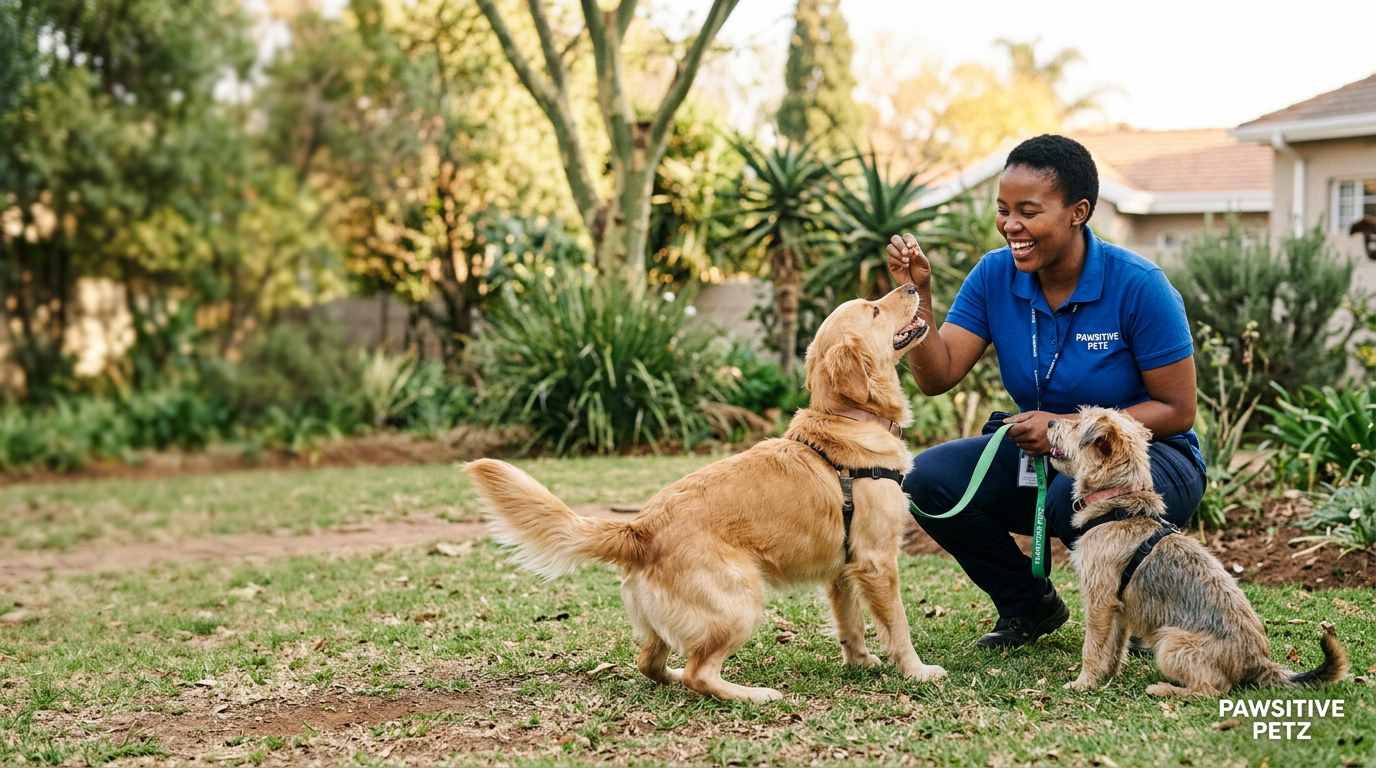
Choosing force-free training means choosing not to rely on fear or pain to get compliance. Instead, we focus on guiding a dog's choices through clarity, structure, and cooperation.
2. Why Rewards Work Better Than Punishment
A lot of what we do comes down to a well-established learning principle called operant conditioning: the science of how animals learn from the consequences of their actions. When a behaviour leads to something good (a tasty treat, a game, genuine praise), an animal is far more likely to repeat it.In practice, this looks like:
- Catching the good stuff. Rather than waiting for a dog to mess up so we can correct it, we watch for moments they're doing the right thing and reinforce it heavily.
- Building positive associations. When cues and good behaviour are consistently paired with things a dog actually wants, listening stops feeling like an obligation and starts feeling like a good bet. That's a meaningfully different emotional experience for the dog, and it shows.
3. Emotional Wellbeing Comes First
A well-behaved dog isn't just one that follows cues when asked. It's a dog whose emotional and physical needs are genuinely being met.Most behavioural struggles—reactivity, excessive barking, destructive chewing—trace back to stress, over-arousal, or unmet needs rather than a dog simply being "difficult." That's why emotional wellbeing sits at the center of our approach:
- Reading stress signals early. Subtle cues like lip-licking, stiffening, or dilated pupils tell you a lot before a dog reaches their limit. Learning to spot them means you can step in and advocate for your dog before things escalate.
- Meeting more than physical needs. Exercise matters, but so does mental enrichment, like sniffing time, problem-solving, and the freedom to just be a dog. This is something we build into walks, sitting visits, and boarding stays, not just formal training sessions.
4. Communication Over Control
Older "pack leader" models frame life with a dog as a constant power struggle: dominate or be dominated. We don't work that way, and modern behavioural science backs that decision.
Control-based relationships tend to break down over time. What actually holds up is communication: clear cues, consistent boundaries, and guidance a dog can predict and understand. When a dog knows what's expected of them and trusts that the expectations are fair, cooperation follows naturally; no power struggle required.
Building a Relationship, Not Just Good Manners
This philosophy is the thread running through every service we offer, whether that's a daily walk, a pet sitting visit, an extended boarding stay, or a grooming appointment. It's not just about producing a well-mannered dog. It's about protecting the trust between you and your dog, and extending that same trust to anyone else who cares for them.
When you choose force-free, reward-based training, you're not just teaching polite behaviour. You're building a relationship grounded in safety, understanding, and mutual respect, one that holds up whether you're the one holding the leash or we are.