Dominance Is Dead: Why Your Dog Isn't Trying to Rule the World
Is your dog really trying to be the alpha? Learn why modern canine behaviour science debunks dominance theory and how positive training builds true trust.
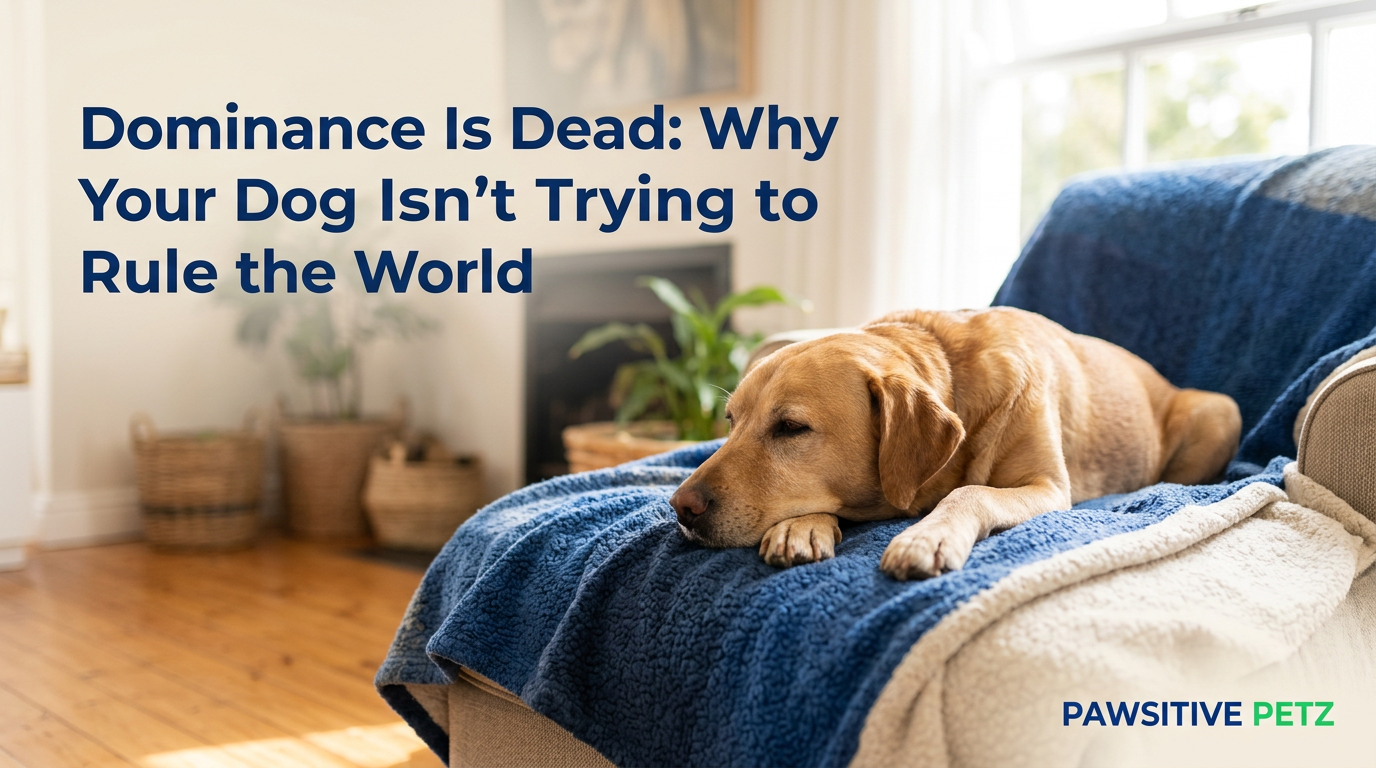
If you've owned a dog for more than five minutes, you've probably heard some version of this advice: eat before your dog eats. Walk through doorways first. Never let them on the couch. Otherwise, they'll think they're in charge.
For decades, this "pack leader" mindset shaped how people trained and lived with their dogs. Some trainers still teach it today. But here's the thing — modern canine behavior science has moved on, and for good reason. Your dog isn't scheming to overthrow the household. They never were.
Let's unpack where this myth came from, why it doesn't hold up, and what actually works instead.
Where Did the "Alpha Dog" Idea Come From?
The dominance theory traces back to research from the 1940s, when scientists studied wolves that had been thrown together in captivity — often unrelated animals competing for limited resources in an unnatural setting. Not surprisingly, those wolves fought for rank constantly. Researchers assumed this was normal wolf behavior and, by extension, normal dog behavior.
There's just one problem: it wasn't normal at all. It was stress.
Later studies of wild wolf packs told a completely different story. In the wild, a "pack" is simply a family — parents and their offspring — cooperating to survive, not battling for control. Even the researcher most associated with popularizing the alpha wolf concept spent years afterward publicly walking it back once he saw how wolves actually behave in nature.
And here's the bigger issue: dogs aren't wolves anyway. Thousands of years of domestication have shaped dogs into a completely different animal, one that's biologically wired to live alongside humans, read our cues, and lean on us for security. They're not sizing us up as rivals. They're looking to us as their people.
Why "Dominance" Tactics Backfire
When someone tries to assert dominance over a dog — physically restraining them, blocking doorways, punishing normal behaviors like jumping or barking — it doesn't teach the dog anything useful. What it does teach them is that their environment is unpredictable and sometimes a little scary.
Put yourself in your dog's paws for a second. They sniff a new smell, they get excited, they lean into you — completely normal dog stuff. If the response to that is correction or intimidation, they don't learn "this behavior is unwanted." They learn "sometimes my person reacts unpredictably, and I should be cautious around them."
That's not leadership. That's just eroding trust.
Dogs, like most social animals, learn best in an environment where they feel safe enough to try things, make mistakes, and get clear feedback. Fear might suppress a behavior temporarily, but it doesn't build understanding — and it definitely doesn't build a relationship you'll enjoy.
The Modern Approach: Cooperation Over Control
Instead of asking "how do I show my dog who's boss," modern trainers and behaviorists ask better questions:
- What is my dog actually trying to communicate right now?
- Are their physical and emotional needs being met?
- Is what I'm asking of them clear, fair, and consistent?
This shift matters because it reframes the entire relationship. You're not managing a rival for status — you're guiding a companion who genuinely wants to understand what you're asking of them, as long as you're communicating clearly.
Positive reinforcement, consistent boundaries, and outlets for natural instincts (sniffing, exploring, playing, chewing) go a lot further than any alpha roll ever could. Dogs raised this way tend to be more confident, more responsive, and just plain easier to live with — not because they're "submissive," but because they trust the process.
What This Looks Like Day-to-Day
This philosophy isn't just theory — it shapes how good dog care actually happens, whether that's a daily walk, an afternoon of pet sitting, or an extended boarding stay. A well-run walk isn't about forcing a dog to heel out of fear; it's about clear cues, positive reinforcement, and giving them room to sniff and explore, because that's mentally enriching for them too. A good boarding environment isn't about dominance hierarchies among dogs in care; it's about reading individual dogs, meeting their needs, and keeping stress low.
If you're evaluating a walker, sitter, or boarding provider for your own dog, this is actually a great filter question to ask: do they talk about training and handling in terms of control, or in terms of communication? The answer tells you a lot about how your dog will actually be treated when you're not around.
Ditching the Pack Leader Mindset
You don't need to eat your dinner before your dog's. You don't need to win the doorway. You don't need to worry that letting them on the couch is a slippery slope to household anarchy.
What your dog actually needs is a guide they can trust — someone who's clear, consistent, and fair. When you let go of the outdated dominance mindset and lean into cooperation instead, you don't lose control. You gain something better: a relationship built on mutual understanding instead of fear.
That's the same philosophy we bring to every walk, every sitting visit, and every boarding stay — because a dog who feels safe and understood is a dog who thrives, whether they're home with you or in our care.