Aggression Is Not Spite: What Your Dog Is Really Trying to Tell You
Understand why dog aggression isn't spite or dominance, but a fear-based plea for space. Learn the science of warning signs and positive behaviour support.
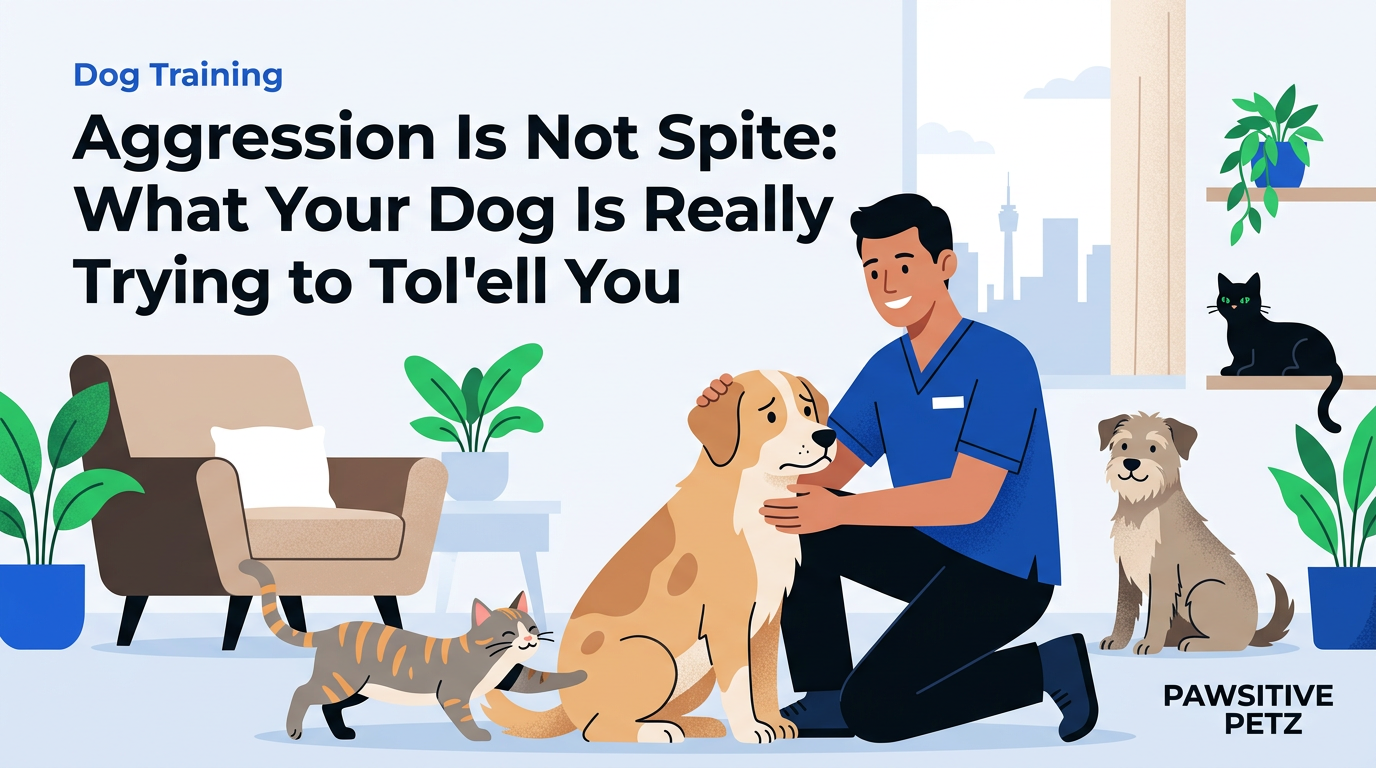
Few things rattle a pet owner like the moment their dog growls, snaps, or lunges at someone. It's embarrassing. It's scary. And it usually comes with a heavy dose of judgment — from strangers, from family, sometimes from the owner themselves. Words like "mean," "stubborn," or "vindictive" get thrown around fast.
Here's what the science actually says: dogs don't act out of spite. They're not plotting, scheming, or trying to punish you. Aggression isn't a personality flaw — it's a symptom. Specifically, it's a sign that your dog's emotional system has been pushed past what it can handle, usually by fear, overwhelm, or a survival instinct kicking in. Once you understand aggression through that lens, everything about how you respond to it changes.Aggression Is a Distance-Increasing Behaviour, Not a Power Move
In behavioural science, aggression falls into a category called "distance-increasing behaviour." In plain terms: it's a tool animals use to create space when they feel threatened, cornered, or overwhelmed. It's not about rank or control. It's about survival.
Take resource guarding as an example — a dog growling when someone reaches for their food bowl or a favorite toy. Older training advice framed this as the dog "testing" who's in charge. Behaviour science tells a different story. That dog isn't trying to dominate anyone. They're anxious about losing something they perceive as essential, and their nervous system is sending up a flare: this matters to me, and I'm afraid you're going to take it.
Reframed that way, the behaviour stops looking like defiance and starts looking like what it actually is — fear.
Dogs Warn You Before They Bite
Most dogs don't go straight from calm to biting. There's usually a whole sequence of warning signs first — sometimes called the "ladder of communication." It can include things like lip-licking, yawning, turning their head away, or stiffening up. A growl is often one of the last, loudest rungs on that ladder before things escalate further.
That's actually good news: a growl is your dog telling you clearly, "I'm uncomfortable. Back off." It's information, not misbehaviour.
The problem is what happens when that warning gets punished. If a dog growls over a toy and gets yelled at or corrected for it, they don't stop feeling afraid — they just learn that warning you is dangerous. Over time, some dogs stop growling altogether and skip straight to snapping or biting, because their early warning system got shut down. Punishing a growl doesn't make a dog safer. It makes them less predictable.
What Actually Helps: Managing the Emotion, Not Just the Behaviour
If a dog is showing signs of aggression, the goal isn't to suppress the behaviour — it's to understand and address what's driving it. A few things that genuinely help:- Spot the triggers. What specific people, situations, or environments send a dog's stress levels up? Certain sounds, unfamiliar dogs, tight spaces, or having a resource approached too quickly are common ones.
- Respect thresholds. Pushing a stressed dog closer to something that scares them rarely helps. Giving them room to decompress does.
- Work on the underlying feeling, not just the symptom. This is where positive reinforcement and gradual desensitization come in — slowly changing how a dog feels about a trigger, rather than just punishing the reaction to it.
This is also where good, individualized care makes a real difference. A dog with resource guarding tendencies or specific triggers needs a walker or sitter who actually reads their body language and respects their space — not someone who pushes through warning signs to "prove" who's in charge. It's part of why getting to know a dog's individual quirks matters just as much as the walk or the visit itself, whether that's during a daily walk, a boarding stay, or time with a pet sitter.
Your Dog Isn't Trying to Ruin Your Day
A growl, a snap, a stiff posture — none of it is your dog trying to make your life difficult. It's them trying to cope with something that feels, in that moment, genuinely overwhelming or unsafe.
When you drop the stigma and start listening to what the behaviour is actually communicating, you can respond with patience and structure instead of punishment and fear. That shift doesn't just make your dog easier to handle — it rebuilds the trust that lets them feel safe with you, and with anyone else who cares for them along the way.