Why the Handler Matters: Changing Human Behaviour to Change Dog Behaviour
Dog behaviour change starts with the human at the other end of the leash. Discover why lasting results require consistent handling and clear communication at home.
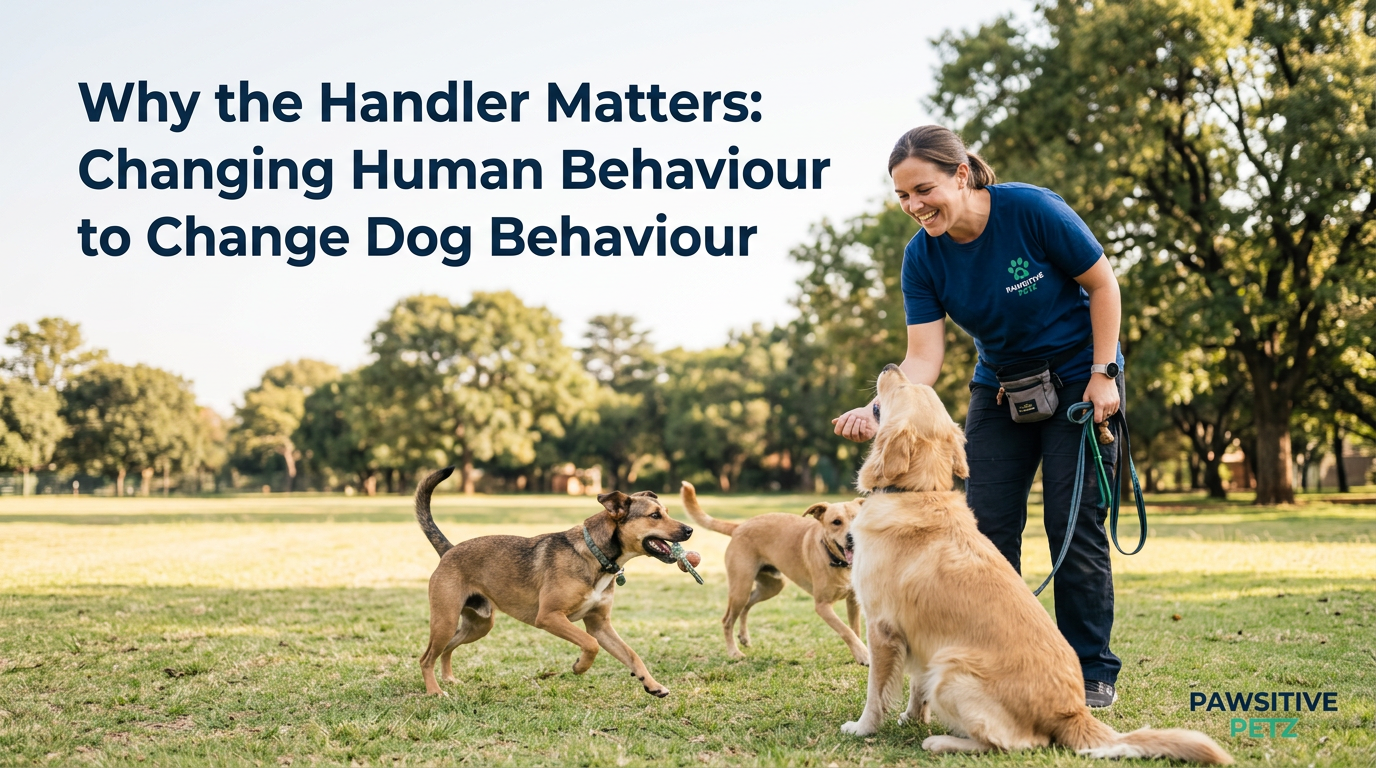
There’s a common fantasy a lot of dog owners hold onto: drop your dog off with a trainer for a couple of weeks, and you’ll pick them up transformed—calm, obedient, listening to every cue like magic.
It’s a nice idea, but it’s not how behaviour change actually works.
Dogs don’t operate in isolation. Almost every dog has a person attached to the other end of the leash, and that person is part of the equation whether they realise it or not. If you want changes to actually stick, the human side of the relationship has to change too.The “Quick Fix” Myth
When people sign up for training classes or book a behaviour consult, there’s often an unspoken hope that the professional will simply “handle it.” But a dog’s behaviour doesn’t exist separately from their home environment. It’s shaped daily by routines, communication habits, and how the people around them react in the moment.
A trainer can make real progress with a dog in a structured session. But if that dog goes home to the same inconsistent boundaries, mixed signals, or accidental reinforcement of the very habits everyone’s trying to change, those old behaviours tend to creep right back. The dog can’t fix this alone, the humans have to shift too.It Takes Two Ends of the Leash
Real behaviour modification is a partnership, not a service you outsource. Whether the issue is jumping on guests, leash reactivity, or anxiety, working through it usually starts with two questions:
- How did the dog learn this behaviour in the first place?
- What’s currently keeping the behaviour going?
That second question is where owners are often surprised. A lot of unwanted behaviours are unintentionally reinforced by human reactions. Take a dog that jumps up to greet visitors. If the owner responds by pushing the dog away or talking to them excitedly (even to say "no!"), the dog still got attention. From the dog’s point of view, jumping worked. Fixing it means the humans need to learn to do something less intuitive: stay boring and unreactive when the jumping happens, and reward the moment all four paws hit the floor instead.
Changing Your Own Habits First
Shifting your own behaviour takes more patience than people expect. A few things that tend to make the biggest difference:Consistency across the household. Dogs do best with predictable rules. If one person allows a behaviour and another shuts it down, the dog isn’t being stubborn. They’re genuinely confused about what’s expected.
Timing matters more than most people think. Dogs learn through association, which means rewards, corrections, and cues need to land at the right moment to actually connect to the behaviour you’re trying to shape.
Managing the environment counts as training too. Blocking access to a trigger, adjusting a walking route, or setting up the house so a dog isn’t constantly rehearsing an unwanted habit gives everyone room to build new skills without fighting old ones.